This article contains affiliate links. As an Amazon Associate, Fishella earns from qualifying purchases.
The best goldfish food is a complete, balanced diet that suits your fish’s size, variety, and feeding habits. Omega One Small Sinking Goldfish Pellets are a strong option for everyday feeding. Hikari Sinking Goldfish Excel is worth considering if you want a sinking diet with spirulina and added color-supporting ingredients. Saki-Hikari Fancy Goldfish is another option for fancy varieties.
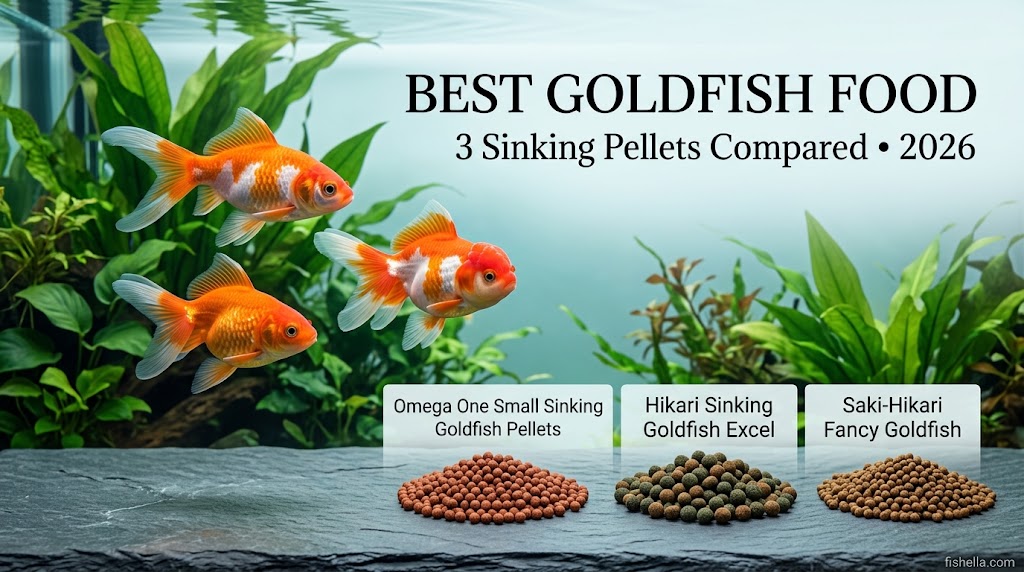
Sinking pellets can make feeding easier for some goldfish, especially fancy breeds. However, no single food is best for every fish. Pellet size, portion control, and water quality also matter.
This guide compares three goldfish foods, explains their main differences, and shares practical feeding tips for beginners.
Best Goldfish Food: Quick Picks
| Product | Best for | Main advantage | Main consideration |
|---|---|---|---|
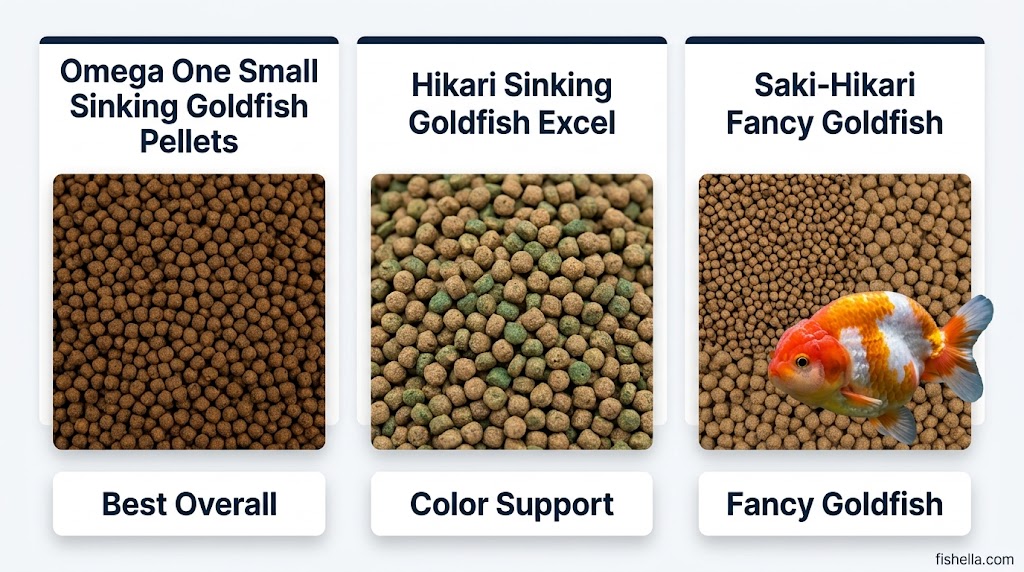
| Omega One Small Sinking Goldfish Pellets | Everyday feeding | Salmon, herring, and shrimp ingredients | Check pellet size and the full ingredient list |
| Hikari Sinking Goldfish Excel | Daily feeding and color support | Spirulina and carotenoids | Contains wheat-based ingredients |
| Saki-Hikari Fancy Goldfish | Fancy goldfish | Formulated for fancy varieties | Check the exact formula and feeding directions |
Our starting recommendation: Consider Omega One Small Sinking Goldfish Pellets for a general-purpose sinking diet. Compare the other options if your fish are fancy varieties or you have specific dietary preferences.
Prices, package sizes, and availability can change. Check the current product listing before ordering.
How We Selected These Goldfish Foods
We did not personally feed-test these products. Our comparison uses available manufacturer information, product labels, and retailer descriptions. Individual customer experiences are not proof that a food will produce the same results for every fish.
We considered five factors:
- Ingredients: Whether the label identifies fish, plant, and other nutritional ingredients.
- Nutrition: Guaranteed protein, fat, and fiber levels where available.
- Pellet type: Whether the food sinks and suits the fish’s feeding habits.
- Pellet size: Whether the food is practical for the fish’s mouth size.
- Intended use: Whether the product is marketed for general goldfish feeding or particular varieties.
A long ingredient list does not automatically make a food better. Look for a complete diet with suitable nutrition rather than judging a product by one ingredient alone.
1. Omega One Small Sinking Goldfish Pellets: Best Overall
Best for: Keepers looking for a sinking pellet for regular goldfish feeding.
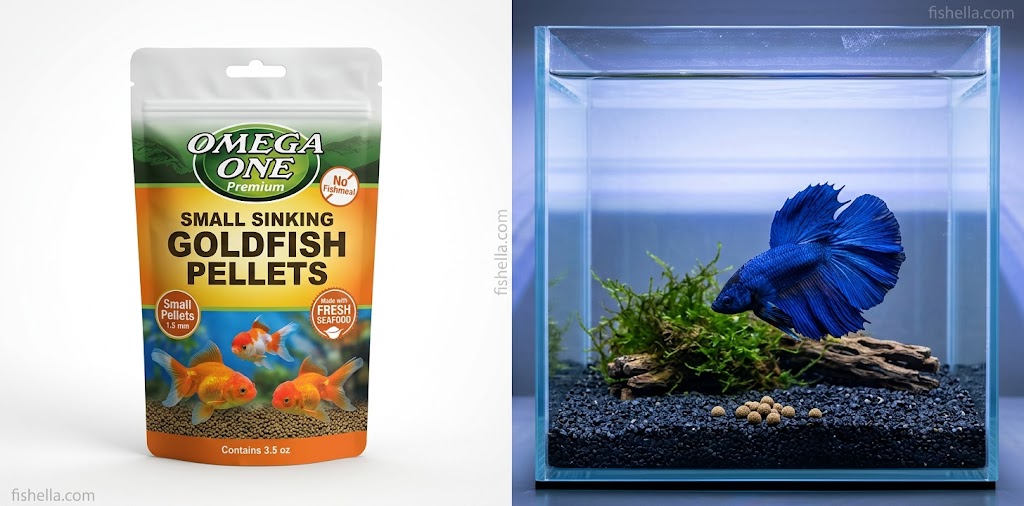
Omega One Small Sinking Goldfish Pellets contain salmon, whole herring, wheat germ, wheat flour, whole shrimp, and other ingredients. The manufacturer describes this food as a daily diet for goldfish and highlights its omega-3 and omega-6 content.
The manufacturer’s published guaranteed analysis lists at least 35% crude protein, at least 10% crude fat, and no more than 3% crude fiber. These figures can help you compare it with other goldfish foods. They do not, by themselves, establish that it is nutritionally superior to every alternative.
Pros
- Sinking pellet format.
- Includes named fish and shrimp ingredients.
- Published nutritional analysis makes label comparisons easier.
- Intended for regular goldfish feeding.
Cons
- The small pellet size may not suit every fish.
- Contains wheat-based ingredients.
- Some keepers may prefer a different ingredient profile.
Our take: Omega One is a reasonable starting point for everyday feeding. Make sure your goldfish can find and swallow the pellets easily. If the pellets are too small, too large, or regularly left uneaten, reconsider the size or format.
Manufacturer reference: Omega One Goldfish Pellets
2. Hikari Sinking Goldfish Excel: Best for Color Support
Best for: Keepers who want a sinking daily diet with color-supporting ingredients.
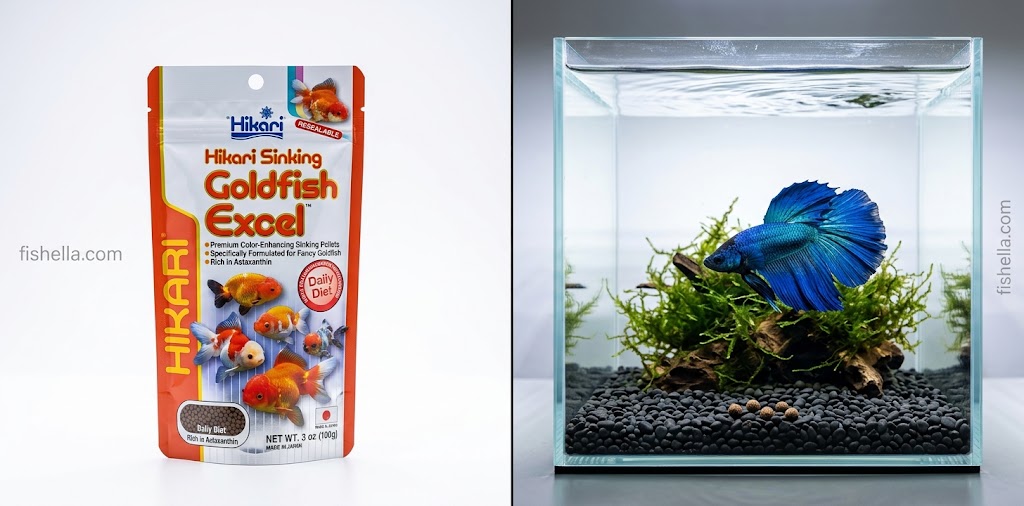
Hikari Sinking Goldfish Excel is formulated for standard goldfish and includes spirulina and selected carotenoids. The manufacturer also describes it as a daily diet designed to support growth and desirable body form.
Its published guaranteed analysis lists at least 40% crude protein, at least 6% crude fat, and no more than 2% crude fiber. Compare these figures with other foods, but remember that guaranteed analysis alone cannot determine overall diet quality.
Hikari also explains that natural ingredients can cause slight color differences between production batches. Such differences do not necessarily indicate a change in nutritional quality.
Pros
- Sinking format.
- Contains spirulina and carotenoids.
- Published feeding instructions and nutritional analysis.
- Intended for regular feeding of standard goldfish.
Cons
- Contains wheat flour and other plant-based ingredients.
- Pellet size must suit the fish.
- Color enhancement varies with the fish, diet, genetics, and conditions.
Our take: Hikari Excel is worth comparing if you want a sinking food with ingredients intended to support coloration. Do not expect a particular color change simply from switching brands.
Manufacturer reference: Hikari Sinking Goldfish Excel
3. Saki-Hikari Fancy Goldfish: Best for Fancy Varieties
Best for: Keepers of fancy goldfish who want a food formulated for their variety.
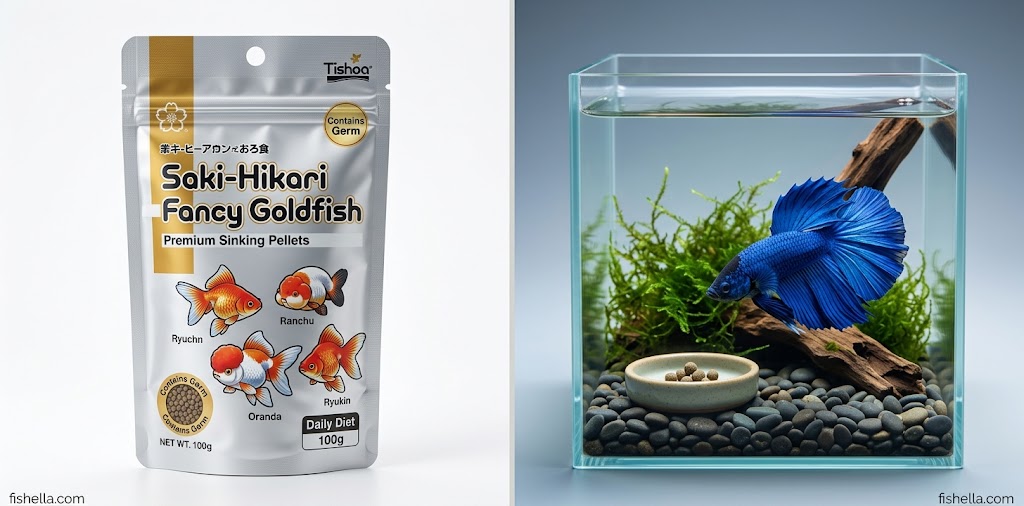
Fancy goldfish, including orandas and ranchus, often have body shapes that affect how they swim and feed. A suitable sinking pellet can make food easier to reach without requiring the fish to feed at the surface.
Saki-Hikari offers fancy-goldfish diets, including formulas marketed for balance and color enhancement. Check the exact product name and label before buying because different formulas may have different purposes and nutritional profiles.
Sinking food does not prevent every buoyancy problem. Fancy goldfish can develop abnormal floating or swimming for several reasons, including illness, anatomy, diet, and environmental conditions.
Pros
- Fancy-goldfish-specific formulas are available.
- Sinking options can suit fish that struggle at the surface.
- Different formulations offer choices for different feeding goals.
Cons
- The exact formula matters; not every Saki-Hikari product is identical.
- Usually costs more than some basic goldfish foods.
- A specialized food cannot guarantee freedom from buoyancy problems.
Our take: Consider a suitable Saki-Hikari Fancy Goldfish formula if you keep fancy breeds. Follow the package directions, monitor body condition, and avoid assuming that food alone will resolve abnormal swimming.
Manufacturer reference: Hikari Goldfish Diets
How to Choose the Best Goldfish Food
Sinking Pellets vs. Floating Food
Both pellets and flakes can provide suitable nutrition when they are formulated as complete goldfish food and fed correctly.
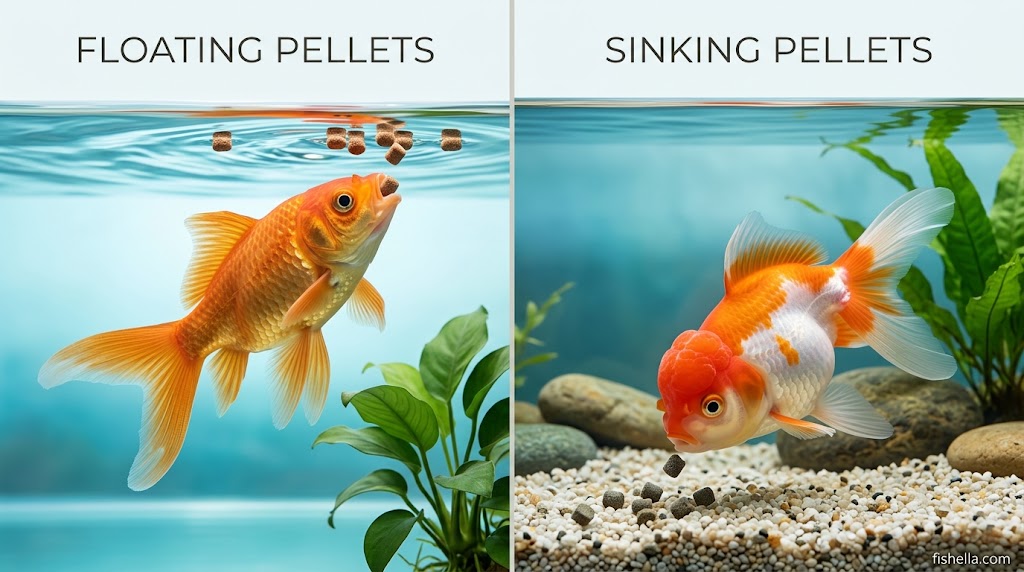
Sinking pellets may suit fancy goldfish that struggle to feed at the surface. They can also make it easier to observe food consumption near the bottom.
Floating food is not automatically harmful. If your goldfish feeds comfortably and remains healthy, there may be no need to change its diet solely because the food floats.
Choose the format that lets your fish eat comfortably without leaving excess food behind.
Check the Ingredients and Guaranteed Analysis
Read the complete label rather than relying on the front of the package.
Compare:
- The first several listed ingredients.
- Guaranteed protein, fat, and fiber levels.
- Feeding instructions and intended fish varieties.
- Any preservatives or ingredients you prefer to avoid.
Omega One and Hikari publish different nutritional profiles. Neither protein percentage nor the presence of one appealing ingredient is enough to determine which food is best for every goldfish.
Choose the Right Pellet Size
A pellet should be small enough for your goldfish to eat comfortably. A fish that repeatedly spits out food or leaves pellets uneaten may need a different size or food format.
Watch your fish during feeding. Make sure smaller or slower fish get their share, especially in a tank with several goldfish.
Add Variety Carefully
A complete goldfish food can form the foundation of the diet. Suitable additions may include small portions of blanched vegetables or appropriate frozen foods.
Introduce new foods gradually and remove leftovers. Avoid replacing a balanced staple with large quantities of treats or vegetables.
If your goldfish has a medical condition or persistent digestive or buoyancy symptoms, ask an aquatic veterinarian about its diet.
How Much and How Often Should You Feed Goldfish?
There is no single portion that works for every goldfish. Age, body size, water temperature, activity, and the number of fish all affect feeding needs.
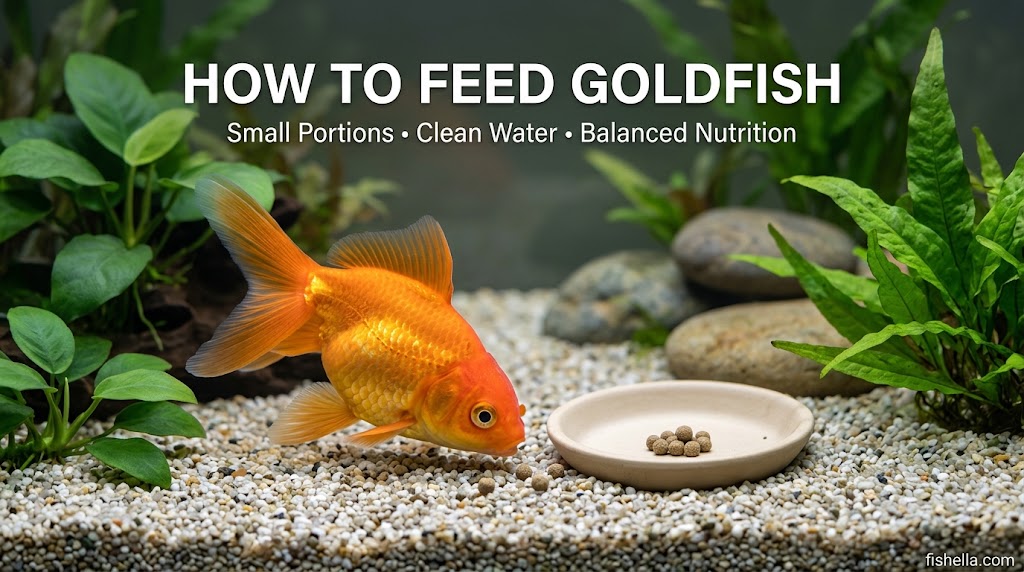
Use these practical guidelines:
- Start with a small portion. Follow the food manufacturer’s instructions and observe how quickly your fish eat.
- Watch the whole tank. Make sure each fish gets food rather than allowing one fish to consume most of it.
- Remove leftovers. Uneaten food breaks down and can worsen water quality.
- Adjust gradually. Avoid repeatedly adding more food when some remains uneaten.
- Monitor water conditions. Check ammonia and nitrite if water quality declines or feeding changes significantly.
Many aquarium keepers feed adult goldfish once or twice daily, adjusting the amount to the fish and conditions. Follow the product label and observe your fish rather than relying on a fixed number of pellets for every aquarium.
Overfeeding can contribute to poor water quality. If your goldfish becomes swollen, stops eating, or develops abnormal swimming, investigate the cause instead of automatically skipping meals or changing food.
For water testing, read our API Master Test Kit vs. Test Strips comparison. You can also see our guide to the best aquarium water conditioners.
Frequently Asked Questions
What is the best goldfish food for everyday feeding?
A complete goldfish pellet that suits your fish’s size and feeding habits is a good starting point. Omega One Small Sinking Goldfish Pellets and Hikari Sinking Goldfish Excel are two options to compare.
Are sinking pellets better for goldfish?
Not for every goldfish. Sinking pellets can help fancy varieties that have difficulty feeding at the surface, but a suitable floating food can also provide balanced nutrition.
Can goldfish eat flakes?
Yes. Complete goldfish flakes can provide suitable nutrition. Feed small portions and remove leftovers before they break down in the aquarium.
Why is my goldfish floating sideways or struggling to swim?
Abnormal floating can have several causes, including buoyancy disorders, illness, and poor water conditions. Test the water and seek advice from an aquatic veterinarian if symptoms persist or the fish struggles to swim.
Do not assume that changing to sinking pellets will cure the problem.
Can goldfish eat betta food?
Betta food should not be the regular staple for goldfish. Choose a complete food formulated for goldfish because their nutritional needs differ.
Can goldfish eat peas?
Goldfish may eat small portions of suitable, softened vegetables, including peas prepared appropriately. Treat these as dietary additions rather than a replacement for complete goldfish food.
How long can goldfish go without food?
The safe interval depends on the fish’s age, health, water temperature, and condition. Do not use fasting as a routine way to manage bloating. Arrange a suitable feeding plan with a trusted fish sitter for longer trips.
Final Verdict: Which Goldfish Food Should You Choose?
- Best overall starting option: Omega One Small Sinking Goldfish Pellets for keepers seeking a general-purpose sinking diet.
- Best for color-supporting ingredients: Hikari Sinking Goldfish Excel, with spirulina and carotenoids.
- Best for fancy goldfish: A suitable Saki-Hikari Fancy Goldfish formula selected according to its label.
The best goldfish food is one your fish can eat comfortably, that provides complete nutrition, and that you can feed without leaving excess waste in the aquarium. Choose the right pellet size, follow the feeding directions, and keep your water clean for the best long-term results.
Learn more in our complete Goldfish Care Guide to help your goldfish stay healthy as they grow.