How to Build Trust With a Betta Fish? You can build trust with your betta fish by approaching the tank calmly, following a consistent feeding routine, and interacting gently every day. Give your fish time to recognize your presence without tapping the glass, chasing it, or forcing contact. With patience and positive experiences, your betta may become more comfortable around you over several weeks.
Start by spending a few quiet minutes near the aquarium each day. Move slowly and let your betta observe you without feeling threatened. Consistent, gentle interactions can help reduce fear and encourage curiosity.
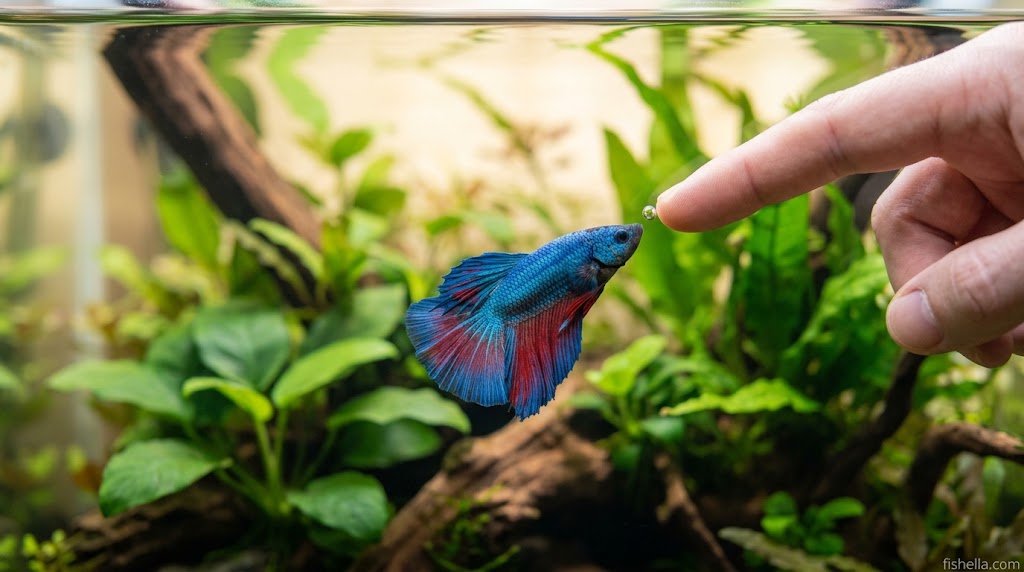
You can also use feeding time to build a positive association with your presence. Offer small, appropriate portions and gradually introduce simple activities, such as following your finger outside the glass. Always let your fish approach at its own pace.
Every betta has a different personality, so progress will vary. In this guide, you’ll learn practical ways to help your betta feel safer around you while keeping its health and comfort a priority.
Why Trust Matters for a Betta
Bettas are curious, but they are also prey animals in the wild. A betta that feels threatened hides, clamps its fins, loses color and eats poorly. A betta that feels safe explores, flares playfully, builds bubble nests and interacts with people. Trust is really about reducing stress until your presence means something good.
Step 1: Set Up a Tank That Feels Safe
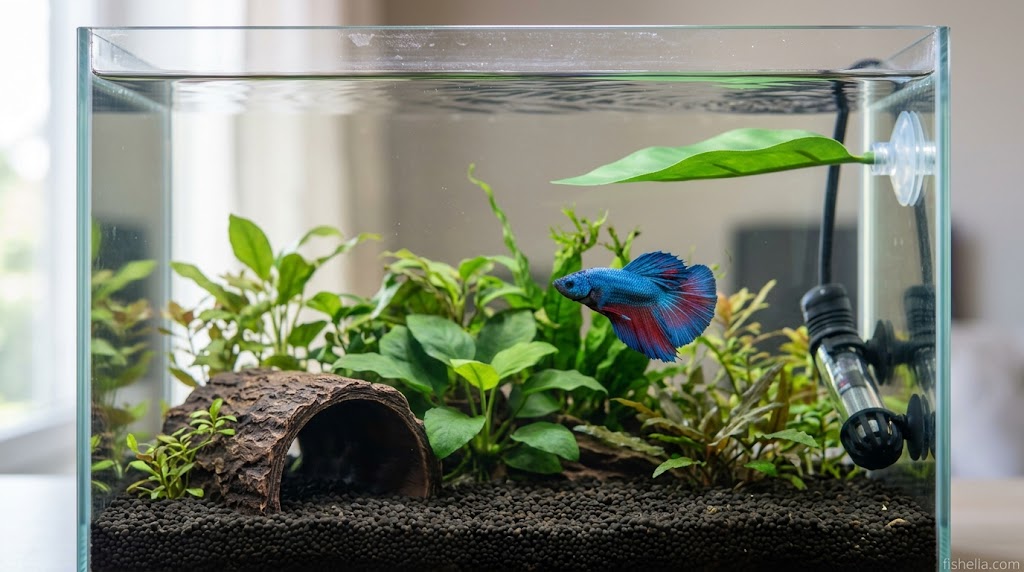
A secure fish is much easier to bond with (see our complete betta tank setup guide). Make sure you have:
- At least 5 gallons (19 liters) of space with a gentle filter flow, since bettas have long fins and struggle in strong currents.
- A heater keeping water steady at 78–80°F (25–27°C).
- Hiding places: a cave, a half log or soft silk plants. Avoid sharp plastic decorations that can tear fins.
- Floating plants or a leaf hammock near the surface, where bettas like to rest.
- Stable water quality: weekly partial water changes and regular testing.
Step 2: Give Your New Betta Time to Settle
For the first three to five days, do the basics only: feed, check the water and leave the fish alone. Do not tap the glass, hover over the tank or show the fish to visitors. Let it learn that nothing bad happens in its new home.
Step 3: Move Slowly and Stay Predictable
Bettas read movement. Fast, looming shapes feel like predators. Instead:
- Approach the tank from the front and at eye level.
- Move your hands slowly, and avoid sudden shadows from above.
- Speak softly or stay quiet. Vibrations matter more than sound.
- Visit at the same times each day so your arrival becomes a familiar pattern.
Step 4: Use Feeding to Create a Positive Link
Food is the fastest route to trust.
- Feed small portions twice a day at consistent times.
- Stand near the tank for a few moments before dropping the food.
- After about a week, feed from the same spot each time so the fish learns where you appear.
- Once your betta swims up eagerly, hold a pellet or freeze-dried bloodworm with clean tweezers just below the surface.
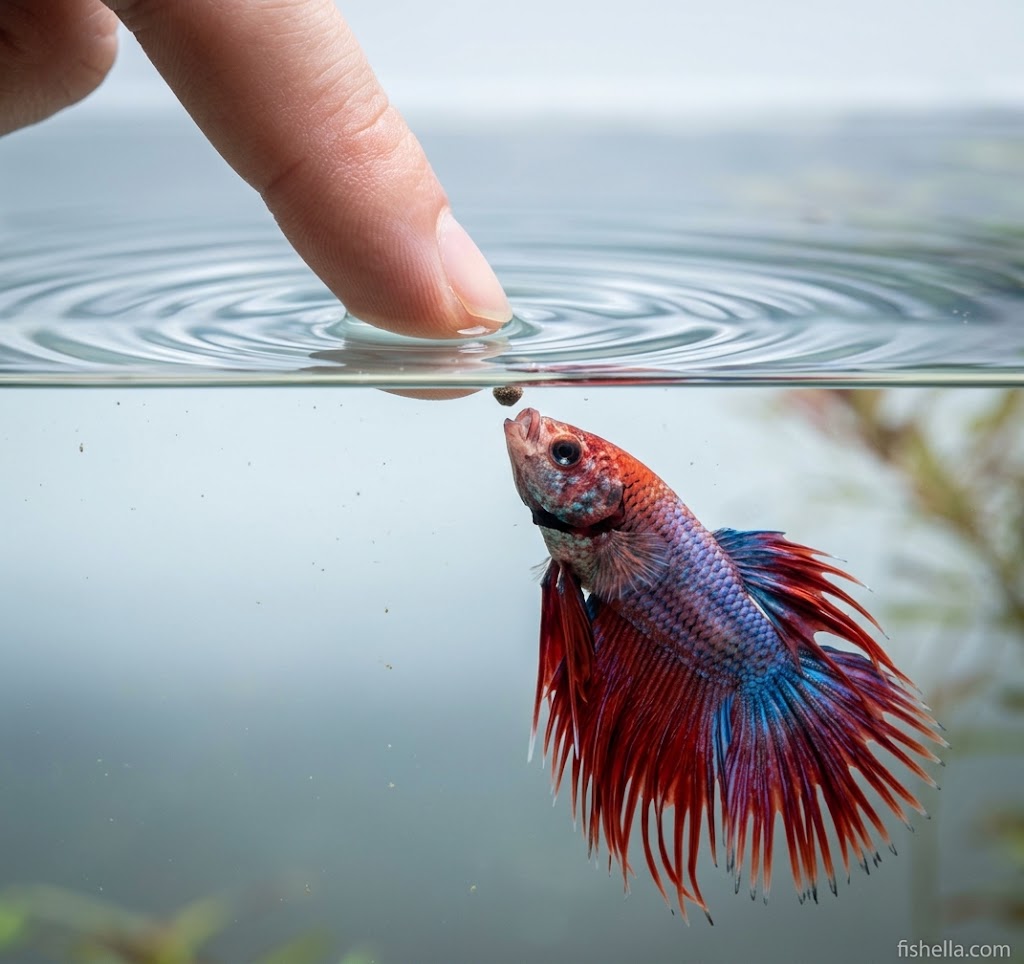
- Later, try feeding from a clean, dry fingertip held at the surface.
Never overfeed: three to four pellets per meal is typical for most adult bettas (details in our betta feeding guide).
Step 5: Introduce Your Hand Gradually
Only try this once your betta already approaches you at feeding time.
- Days 1–5: rest your hand flat against the outside of the glass for a minute or two.
- Days 6–10: hold your finger near the glass and let the fish follow it.
- Days 11 onward: lightly dip a clean, soap-free finger at the surface during feeding.
Wash your hands thoroughly with water only, no soap or lotion, before putting them in the tank. Never grab, chase or touch the fish’s body, since this damages its protective slime coat.
Step 6: Add Gentle Enrichment
A mentally engaged betta is a more confident betta.
- Rearrange decorations every few weeks, one item at a time.
- Add a betta log or leaf hammock to encourage natural resting.
- Offer variety in food, such as frozen brine shrimp or daphnia a few times a week.
- Use a floating target or small floating toy as a playful focus.
- Avoid mirrors for more than a minute or two, since constant flaring is stressful.
Signs Your Betta Trusts You
- It swims to the front of the tank when you come near.
- It follows your finger along the glass.
- It eats right away when you offer food.
- Its fins are open and relaxed, and its colors look bright.
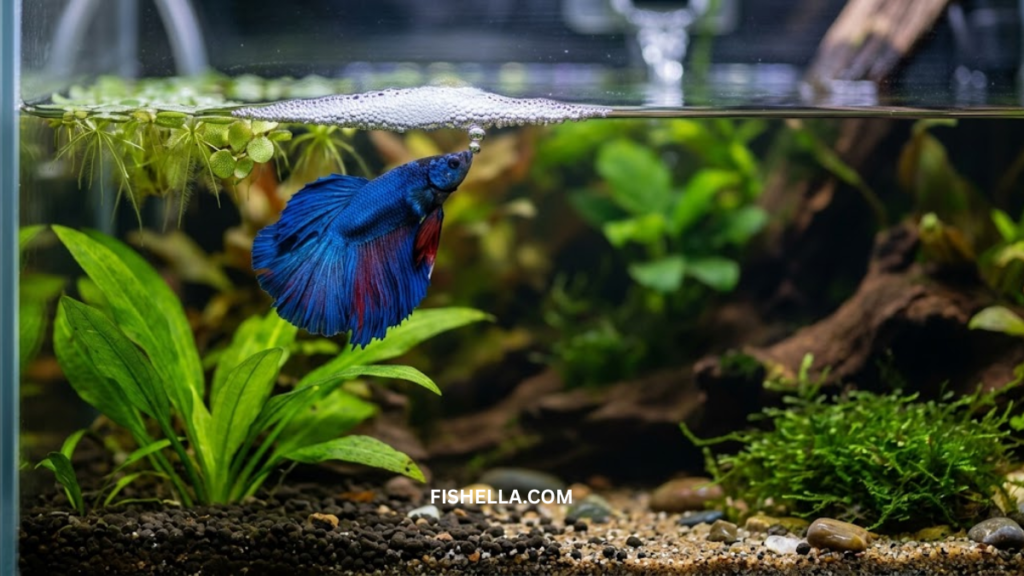
- It builds bubble nests and explores the whole tank.
Signs Your Betta Is Stressed
- Clamped or shredded fins
- Pale or stripy color
- Hiding for long periods
- Rapid breathing or resting on the bottom
- Refusing food
If you see these, check water temperature and quality first, reduce noise and activity, and give your fish a few quiet days.
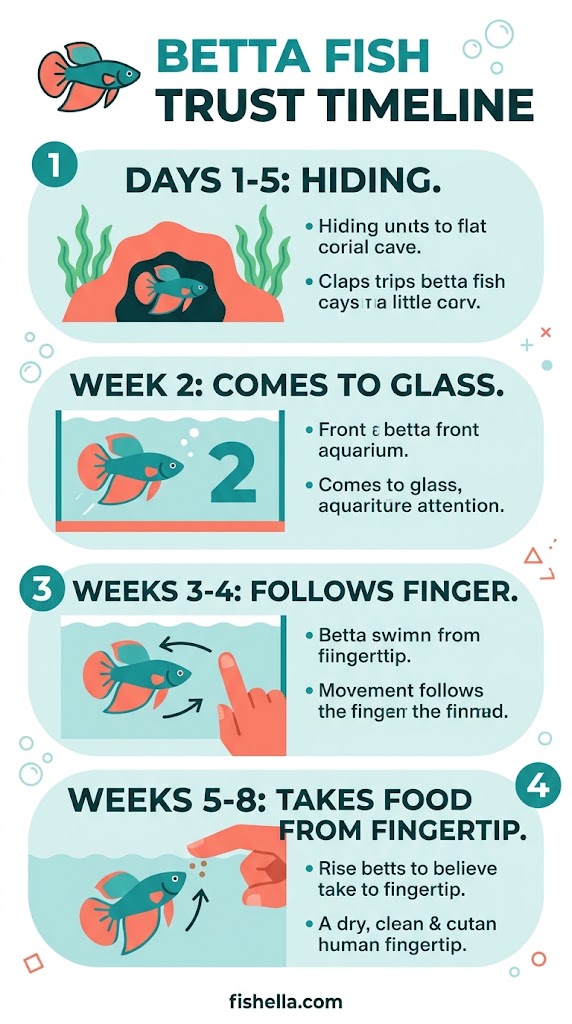
Trust-Building Timeline
| Time | What to expect |
|---|---|
| Days 1–5 | Hiding, cautious swimming, minimal interaction |
| Week 2 | Comes to the glass at feeding time |
| Weeks 3–4 | Follows your finger, recognizes you |
| Weeks 5–8 | Eats from tweezers or fingertip, shows curiosity |
Every fish is different. Shy or older bettas may take longer, and that is normal.
Common Mistakes That Break Trust
- Tapping the glass or rapping on the tank
- Frequent, unnecessary tank rearranging or full water changes
- Strong filter currents or cold water
- Showing the betta its reflection too often
- Handling the fish or chasing it with a net
- Inconsistent feeding times
Frequently Asked Questions
Can a betta fish recognize its owner? Yes. Many bettas learn to recognize the person who feeds them, usually within a few weeks, and respond to them differently from strangers.
How do I know if my betta likes me? A betta that comes to the glass, follows you, eats readily and shows bright colors with relaxed fins is comfortable with you.
Can I pet my betta? It is best not to. Brief, gentle contact at the surface during feeding is the safest, but touching the body can harm the slime coat.
Why is my betta hiding all the time? Common causes are a new environment, a strong filter current, cold water, bright lighting or poor water quality. Fix the tank first, then give it time.
How long does it take to gain a betta’s trust? Usually one to two weeks for basic comfort and one to two months for strong recognition and hand-feeding.
Final Thoughts
Trust with a betta grows from routine, patience and a healthy tank. Keep your movements slow, feed consistently and respect your fish’s pace. Once your betta feels safe, it will gladly show you its personality, and you will be in the best position to try simple tricks together.
Building trust is easier when your betta feels safe and comfortable in its environment. Read our complete betta fish care guide to learn how proper tank setup, clean water, and a healthy diet can support your fish’s well-being.