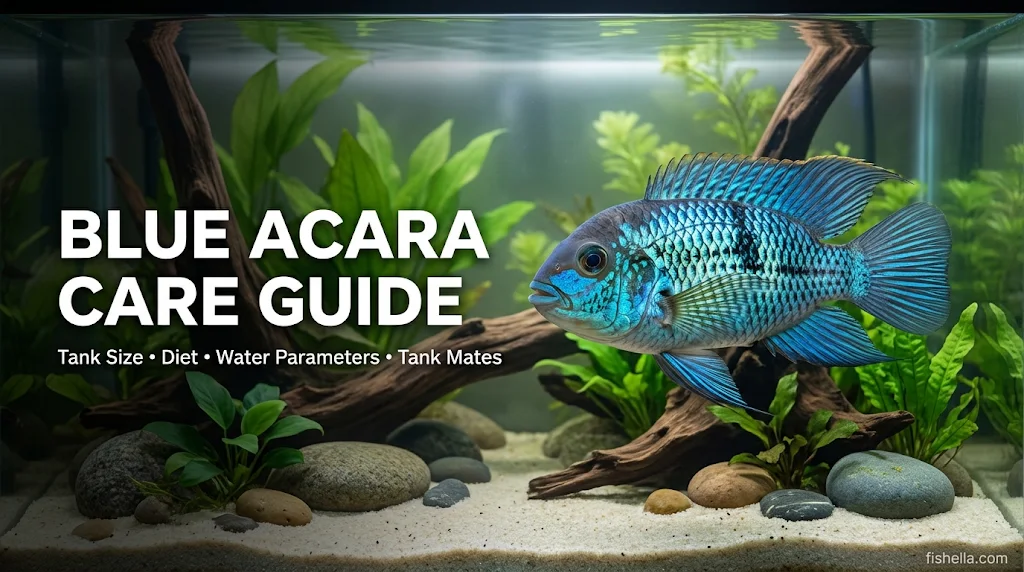
Choosing between a Blue Acara and an Electric Blue Acara can be confusing, especially when both fish share similar characteristics but display noticeably different colors. This Blue Acara vs Electric Blue Acara comparison explains their differences in appearance, size, temperament, health, breeding, and aquarium requirements. Whether you are an experienced fishkeeper or exploring freshwater fish care for the first time, this guide will help you understand both varieties and decide which one is better suited to your aquarium.
At first glance, the Electric Blue Acara may look like a completely different fish because of its bright, metallic-blue body. However, its relationship with the regular Blue Acara is more complicated than its appearance suggests. Their trade names, breeding history, and reported characteristics can vary between sources.
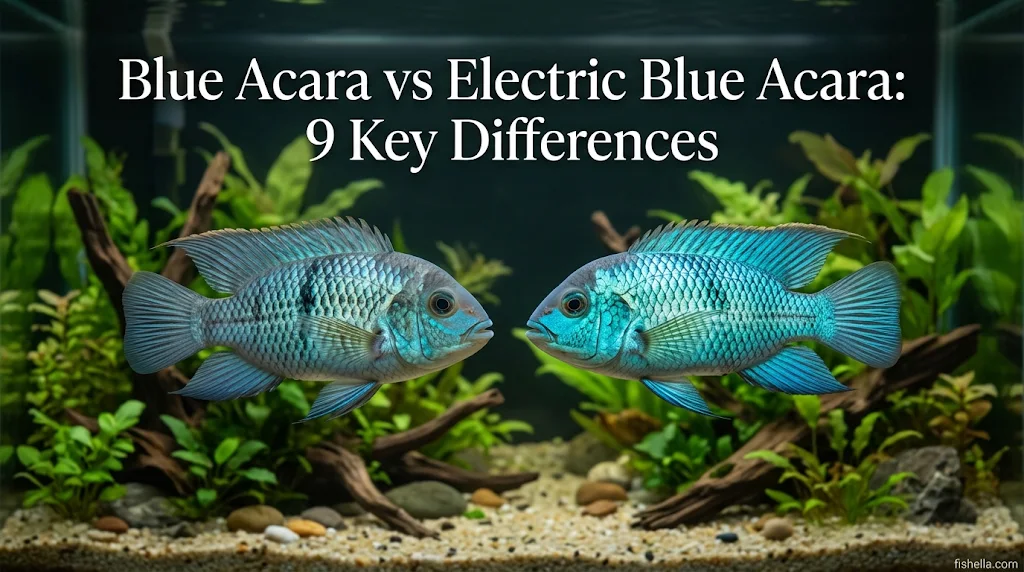
The most noticeable difference is coloration. Regular Blue Acara display a more natural blue-green pattern, while Electric Blue Acara have a much more intense blue appearance. Other differences, particularly those involving genetics, health, and hardiness, require more careful consideration.
Let’s compare both fish to help you make an informed choice.
Are Blue Acara and Electric Blue Acara the Same Fish?
Blue Acara and Electric Blue Acara are closely associated in the aquarium trade, but you should not assume that every fish sold under these names has an identical genetic background.
The regular Blue Acara is scientifically identified as Andinoacara pulcher. It is a South American freshwater cichlid found in parts of northern South America and Trinidad. FishBase records this species at a maximum reported length of approximately 16 cm (6.3 inches).
The Electric Blue Acara is a commercially developed ornamental fish known for its intense blue coloration. Many aquarium references associate it with Andinoacara pulcher and describe it as a selectively bred aquarium form.
However, specialist sources have also proposed hybrid ancestry for some Electric Blue Acara lines. The complete origin is not conclusively established for every fish sold under this trade name.
Therefore, the safest approach is to distinguish the regular wild-type appearance from the Electric Blue trade form without assuming that all commercially available specimens share the same breeding history.
The important takeaway: Both fish belong to the Blue Acara aquarium trade group, but their coloration and potentially their breeding backgrounds can differ.
Blue Acara vs Electric Blue Acara: Quick Comparison
Before exploring individual differences, consider this comparison table.
| Feature | Regular Blue Acara | Electric Blue Acara |
|---|---|---|
| Common name | Blue Acara | Electric Blue Acara |
| Scientific association | Andinoacara pulcher | Commonly associated with A. pulcher |
| Appearance | Natural blue-green coloration | Intense metallic-blue coloration |
| Body pattern | Dark markings and iridescent scales | More uniform electric-blue appearance |
| Adult size | Around 5–6.3 inches | Often reported around 5–6 inches |
| Temperament | Generally peaceful for a cichlid; territorial when breeding | Generally similar, with individual variation |
| Diet | Omnivorous | Omnivorous |
| Breeding | Substrate-spawning cichlid | Breeding background may depend on the line |
| Availability | Common aquarium variety | Depends on breeder and local market |
| Price | Varies by location | Often commands a higher price |
These figures represent commonly reported aquarium sizes rather than guaranteed adult measurements. Individual growth depends on genetics, nutrition, water quality, and living conditions.
9 Major Differences Between Blue Acara and Electric Blue Acara
1. Body Color and Appearance
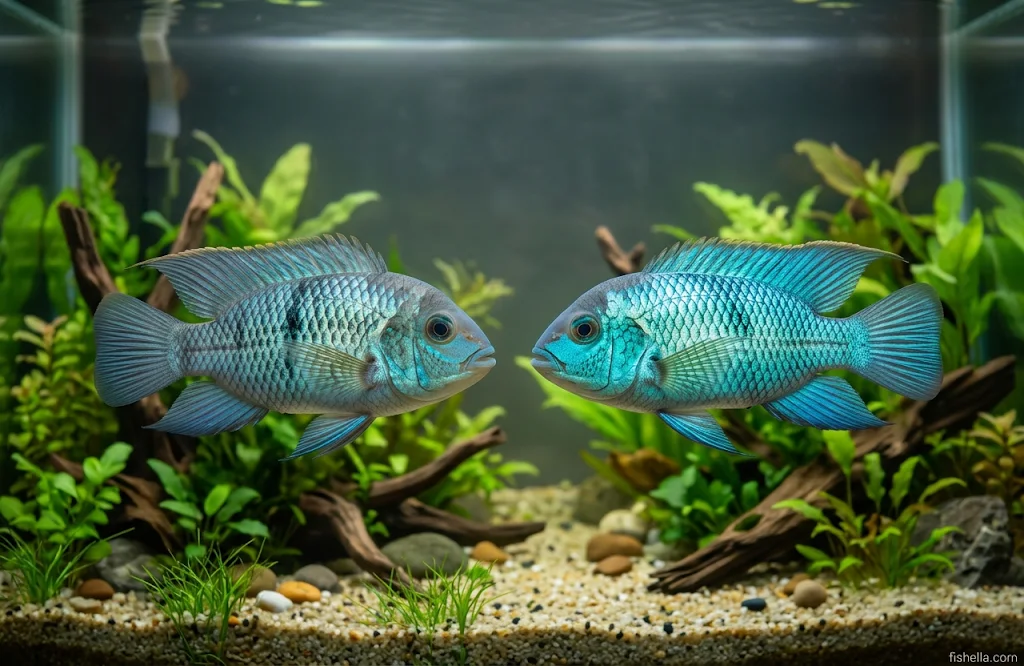
Color is the easiest way to distinguish these two fish.
Regular Blue Acara have a beautiful combination of blue, green, and darker markings. Their bodies display iridescent blue-green scales that reflect light when they swim. Some specimens also show orange or reddish edging along their dorsal fins.
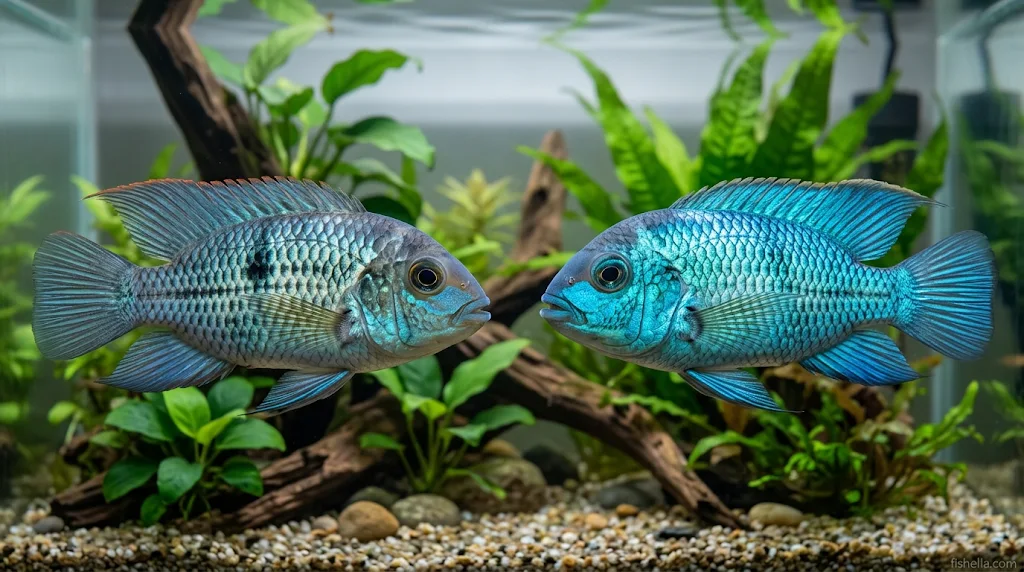
Their natural appearance creates a more varied pattern rather than one continuous blue color.
Electric Blue Acara look noticeably different. Their bodies display a much brighter metallic-blue coloration that extends across most of their scales and fins.
The intense blue appearance makes them especially attractive in freshwater aquariums.
Which looks better?
It depends on your preference:
- Choose a regular Blue Acara if you prefer natural blue-green patterns.
- Choose an Electric Blue Acara if you prefer a brighter, more uniform blue appearance.
Neither fish is automatically healthier or better simply because its coloration looks more impressive.
2. Natural Coloration and Breeding Background
Another important difference involves the origin of their coloration.
Regular Blue Acara naturally develop their characteristic blue-green appearance. Their coloration can change with age, mood, health, and breeding condition.
Electric Blue Acara are commercially recognized for their unusually intense blue coloration. Aquarium sources commonly describe them as selectively bred ornamental forms associated with the Blue Acara.
However, their exact genetic origin remains debated.
Some specialist discussions suggest that certain Electric Blue Acara lines may have a hybrid background involving related cichlids. Other aquarium references describe them as selectively bred color forms.
Without reliable breeding records for an individual fish, it is difficult to establish its exact ancestry.
Buying advice: Ask the breeder about the fish’s parentage and breeding history instead of relying entirely on its shop label.
3. Adult Size and Growth
Both varieties are medium-sized freshwater cichlids.
Regular Blue Acara can reach approximately 6 inches (15–16 cm) in suitable conditions. FishBase records a maximum reported length of 16 cm.
Electric Blue Acara commonly reach approximately 5–6 inches (13–15 cm), although individual specimens may differ.
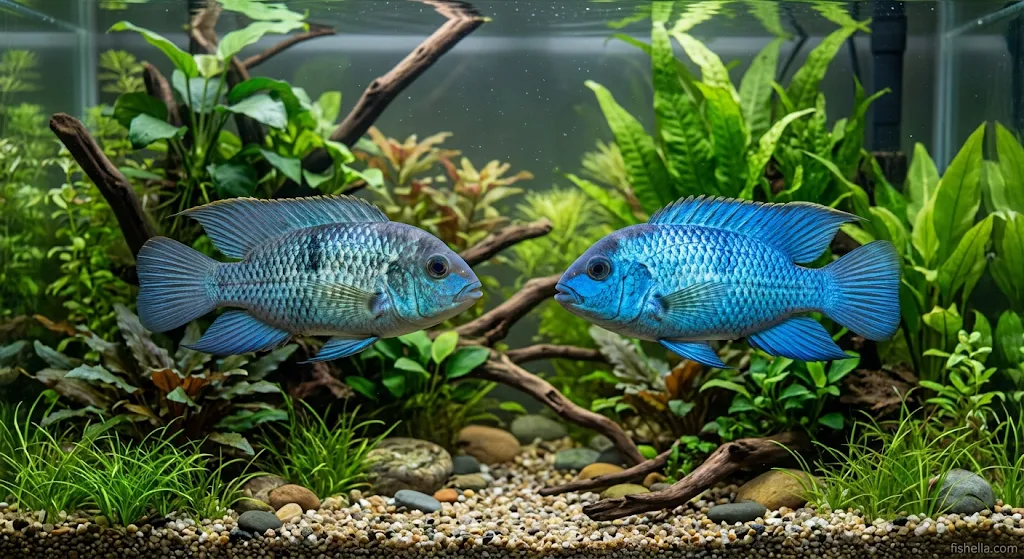
Their final size depends on several factors:
- Genetic background
- Food quality and feeding routine
- Aquarium space
- Water quality
- Overall health
Do not purchase an Electric Blue Acara assuming it will remain small enough for a compact aquarium.
Both varieties need adequate swimming space throughout adulthood.
A practical aquarium plan should consider the fish’s potential adult size rather than its size at the pet store.
4. Temperament and Aggression
Blue Acara have a reputation for being relatively manageable compared with many other medium-sized cichlids. They generally spend their time swimming, exploring decorations, searching the substrate, and interacting with their surroundings.
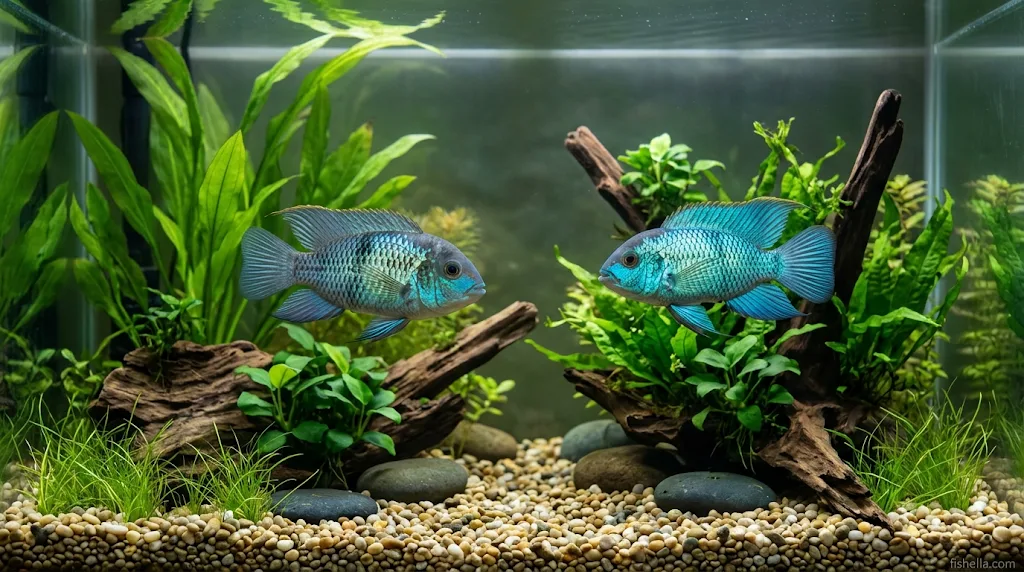
However, they are still cichlids. They may defend territories, particularly when they form a breeding pair. Electric Blue Acara generally display similar behavioral characteristics. Their bright coloration does not automatically make them more aggressive or more peaceful.
Individual temperament can vary depending on:
- Aquarium size
- Available hiding places
- Tankmate selection
- Breeding activity
- Individual personality
During spawning, either variety may become more territorial and chase other fish away from its chosen breeding area.
Which is more peaceful?
There is insufficient reliable evidence to establish that one variety is consistently more peaceful than the other. Choose healthy individuals and provide enough space to reduce territorial conflicts.
5. Activity Level and Behavior
Both varieties are active freshwater cichlids that use different areas of the aquarium.
You may see them:
- Swimming through open water
- Exploring rocks and driftwood
- Searching the substrate for food
- Investigating aquarium decorations
- Defending a selected territory
Blue Acara also have a natural tendency to move substrate while searching for food. Electric Blue Acara can display similar digging and exploratory behavior.
Their activity levels depend more on individual personality, aquarium conditions, and health than on their color. A suitable aquarium should provide open swimming space, stable decorations, and hiding areas. Avoid placing fragile decorations where a digging fish can easily knock them over.
6. Hardiness and Health
Hardiness is one area where aquarium keepers should pay particular attention.
Regular Blue Acara have a reputation for being reasonably adaptable when kept in stable aquarium conditions.
Electric Blue Acara are also commonly kept in home aquariums, but some breeders and aquarium sources report concerns about the quality of certain selectively bred or closely line-bred stocks.
Potential concerns include:
- Poor body development
- Unusual spinal shape
- Damaged fins
- Abnormal swimming
- Poor appetite
- Visible signs of infection
These problems do not affect every Electric Blue Acara. They also do not prove that every specimen has weaker genetics than a regular Blue Acara.
The quality of the breeder and the individual fish matters.
How to choose a healthy fish:
- Observe the fish swimming normally.
- Check that its body appears proportionate.
- Look for clear eyes and undamaged fins.
- Avoid specimens with visible wounds or unusual swelling.
- Ask whether the fish eats regularly.
- Check whether the seller maintains clean, stable aquarium water.
A healthy fish from a responsible breeder is generally a better purchase than a poorly maintained specimen with an attractive appearance.
7. Breeding and Reproduction
Blue Acara are substrate-spawning cichlids.
A mature pair usually selects a suitable flat surface, such as a smooth rock, where the female deposits eggs. The male fertilizes them, and both parents can participate in protecting the eggs and developing fry.
Electric Blue Acara are also commonly reported to display substrate-spawning behavior. However, their breeding background deserves additional attention.
Because the commercial origin of Electric Blue Acara remains debated, breeding outcomes may vary between different lines.
Before attempting to breed them, consider:
- The documented background of both parents
- Their overall health
- Whether they are closely related
- The availability of suitable fry-rearing space
- Whether you can responsibly rehome the offspring
Do not assume that crossing a regular Blue Acara with an Electric Blue Acara will always produce a predictable color pattern.
Reliable parentage records are especially important when breeding ornamental fish.
8. Aquarium Care Requirements
The two varieties have broadly similar aquarium needs when treated as Blue Acara-type cichlids.
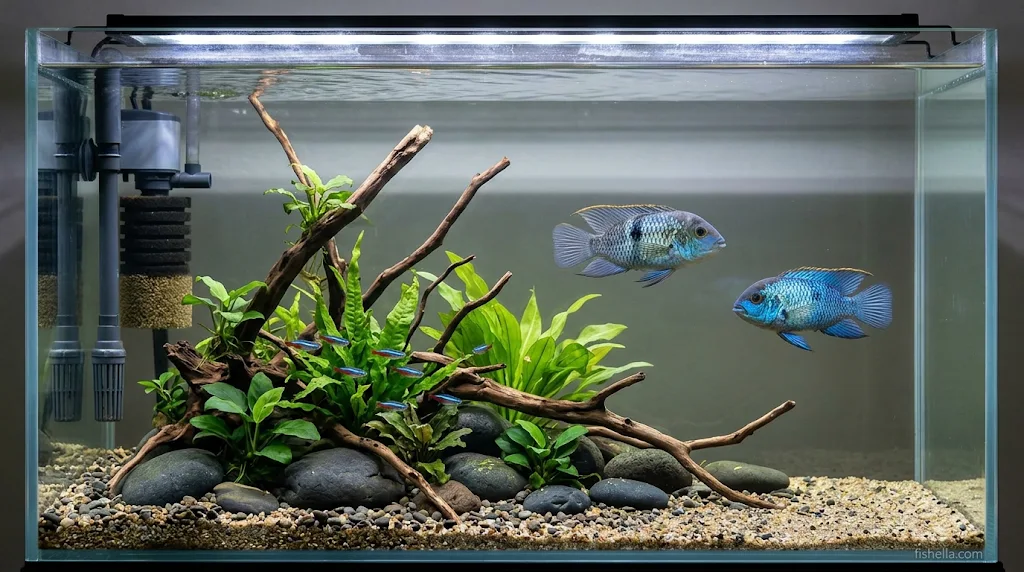
Both require stable freshwater conditions, good filtration, suitable nutrition, and enough room to establish territories. For additional information about the Blue Acara’s natural habitat, water conditions, diet, and compatibility, consult the Blue Acara species profile from Seriously Fish.
Here are practical starting guidelines:
| Care requirement | Recommended approach |
|---|---|
| Aquarium size | Plan around 40–55 gallons or larger, depending on stocking and adult size |
| Temperature | Approximately 72–82°F (22–28°C) |
| pH | Approximately 6.5–8.0 |
| Filtration | Reliable filtration with adequate biological capacity |
| Substrate | Sand or smooth aquarium gravel |
| Decorations | Driftwood, rocks, and secure hiding places |
| Diet | Quality cichlid pellets with varied frozen or suitable live foods |
| Water maintenance | Regular partial water changes and water testing |
These are general husbandry guidelines, not a guarantee that every individual fish will thrive under identical conditions.
Maintain ammonia and nitrite at 0 ppm and keep nitrate under control through appropriate maintenance.
A properly cycled aquarium is essential before introducing either variety.
Both fish may dig around the substrate, so choose sturdy decorations and protect delicate plants.
If you are planning to keep either variety, read our complete Blue Acara care guide for more information about aquarium setup, feeding, water conditions, and tankmates.
9. Availability and Price
Price and availability can vary considerably between countries, aquarium shops, and breeders.
Regular Blue Acara are generally easier to find in many aquarium markets because they have a longer history in the hobby.
Electric Blue Acara may cost more because of their distinctive appearance and commercial demand.
However, there is no universal price difference.
Factors that influence their prices include:
- Fish size and age
- Breeder reputation
- Local availability
- Breeding quality
- Transportation costs
- Demand for electric-blue coloration
When comparing prices, consider the health and background of the fish rather than choosing the cheapest specimen.
A well-maintained fish from a reputable breeder can be a better long-term investment.
Can Blue Acara and Electric Blue Acara Live Together?
Yes, they may live together if the individual fish are compatible and the aquarium provides enough space.
However, compatibility is never guaranteed.
Both varieties can become territorial, particularly when they form a breeding pair. Keeping two fish together in an undersized aquarium can lead to chasing, stress, and injuries.
Before introducing them, consider the following:
1. Provide adequate aquarium space
A larger aquarium gives both fish more room to establish territories and avoid unnecessary conflicts.
2. Create separate hiding areas
Use rocks, driftwood, and other secure decorations to create visual barriers.
3. Monitor their behavior
Watch for persistent chasing, torn fins, hiding, or difficulty accessing food.
4. Consider individual temperament
Two peaceful individuals may coexist successfully, while two territorial individuals may not tolerate each other.
5. Have a backup plan
Be prepared to separate the fish if aggression becomes persistent.
Remember that adding two fish with similar colors does not guarantee compatibility.
Which Is Better for Beginners?
Both varieties can suit aquarium keepers who understand basic freshwater fish care and can maintain a properly sized, cycled aquarium.
However, your experience level and buying priorities should influence your choice.
| Beginner consideration | Regular Blue Acara | Electric Blue Acara |
|---|---|---|
| Appearance | Natural blue-green pattern | Bright metallic blue |
| Availability | Often easier to find | Depends on local breeders |
| Breeding background | Established species identification | Commercial line history can vary |
| Health selection | Choose healthy captive-bred stock | Pay close attention to breeding quality |
| General care | Requires stable conditions | Requires stable conditions |
| Best reason to choose | Natural appearance | Distinctive blue coloration |
Choose a Regular Blue Acara If:
- You prefer natural-looking freshwater fish.
- You want a well-established aquarium species.
- You value documented species identification.
- You find a healthy specimen from a responsible breeder.
Choose an Electric Blue Acara If:
- You prefer bright metallic-blue fish.
- You want a distinctive aquarium centerpiece.
- You can verify the fish’s health and source.
- You understand that commercial breeding histories can differ.
My recommendation: Do not choose solely on appearance. A healthy fish with a reliable breeding background and appropriate aquarium conditions is the better choice.
Which Blue Acara Should You Buy?
Your decision should depend on the type of aquarium you want to maintain.
If you enjoy natural coloration and prefer a traditional South American cichlid, a regular Blue Acara may be the better option. If you want a striking blue centerpiece, an Electric Blue Acara may be more appealing.
Before purchasing either variety, ask the seller these questions:
- How old is the fish?
- What is its current size?
- What food does it accept?
- Has it been quarantined?
- Are there any known health problems?
- Can you provide information about its breeding background?
Whenever possible, observe the fish feeding before purchasing it.Avoid buying a fish simply because it has the brightest color in the aquarium.
Frequently Asked Questions
1. Are Blue Acara and Electric Blue Acara the same species?
Regular Blue Acara are identified as Andinoacara pulcher. Electric Blue Acara are commonly associated with this species in aquarium literature, but their exact commercial breeding history remains debated. Some specialist sources suggest hybrid ancestry for certain lines.
FishBase also provides a scientific overview of Andinoacara pulcher, including its classification, natural distribution, and recorded maximum size.
2. Is Electric Blue Acara smaller than regular Blue Acara?
Electric Blue Acara are commonly reported at approximately 5–6 inches, while regular Blue Acara can reach around 6–6.3 inches. However, individual size varies with genetics and aquarium conditions.
3. Are Electric Blue Acara more aggressive?
There is no strong evidence that Electric Blue Acara are consistently more aggressive than regular Blue Acara. Both can become territorial during breeding and may display different behavior depending on their environment.
4. Do Electric Blue Acara need special care?
They do not necessarily require a completely different care routine. Provide stable freshwater conditions, reliable filtration, appropriate nutrition, and enough swimming space. Pay particular attention to the health and breeding quality of the fish before buying it.
5. Can Blue Acara and Electric Blue Acara breed together?
They may be able to reproduce if they are genetically compatible, but the outcome depends on their actual ancestry. Do not assume that all fish sold under these trade names have identical genetics or will produce predictable offspring.
6. Are Electric Blue Acara suitable for beginners?
They can suit beginners who have an appropriately sized, cycled aquarium and understand cichlid behavior. However, beginners should purchase healthy fish from a reputable source and avoid overcrowding.
7. Why are Electric Blue Acara more expensive?
Their distinctive metallic-blue coloration and commercial demand can increase their price. Availability, breeder reputation, fish size, and local market conditions also affect the cost.
8. Which Blue Acara is easier to keep?
Both can be manageable aquarium fish under stable conditions. Regular Blue Acara have an established reputation for adaptability, while the quality of Electric Blue Acara may vary between breeding lines. The health of the individual fish matters more than its color.
9. Can Electric Blue Acara live with other freshwater fish?
They can live with appropriately sized, compatible tankmates. Avoid very small fish that may become prey and aggressive species that may injure them. Monitor territorial behavior, especially during breeding.
Final Verdict: Blue Acara vs Electric Blue Acara
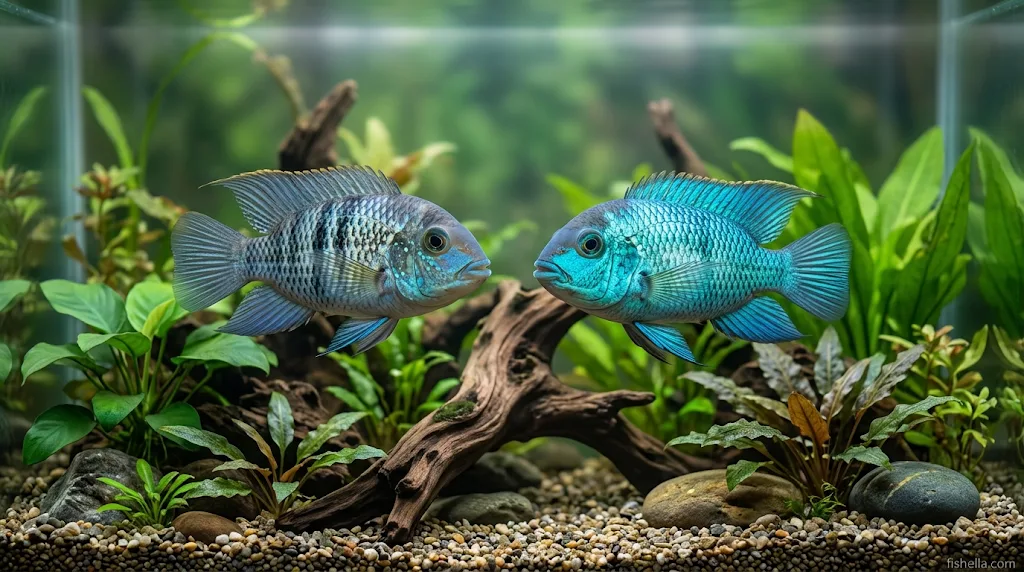
Both fish can make attractive additions to a suitable freshwater aquarium, but they appeal to different preferences.
Regular Blue Acara offer natural blue-green coloration, an established species identity, and an interesting combination of appearance and cichlid behavior.
Electric Blue Acara stand out because of their intense metallic-blue coloration. However, their commercial breeding background can be less straightforward, so choosing a reputable breeder is particularly important.
Neither variety is automatically superior. The better choice depends on your aquarium setup, personal preference, and the health of the fish you purchase.
If you prefer natural coloration and a traditional cichlid appearance, consider the regular Blue Acara. If you prefer a vibrant blue centerpiece, the Electric Blue Acara may be the right choice.
Most importantly, provide either fish with stable water conditions, appropriate nutrition, sufficient swimming space, and responsible long-term care.
Good freshwater fish care starts with choosing healthy fish and creating an environment where they can thrive.